
Candolim is a beautiful village in North Goa, about 15 km from Panaji in Bardez Taluka. Known as the crown jewel of the coastal region, it boasts fine beaches and exotic nightlife.
Built on Portuguese-era history, Candolim Beach runs from Fort Aguada to Calangute, making it one of the longest beaches in Goa. Candolim derives its name from "Candole," a village near the banks of the Arabian Sea whose residents were known as Candolkars — a rare name later replaced by "Candolim" by the Portuguese.
Candolim finds its way into the history books as the epicenter of the Portuguese revolt of 1787. Its culture is a rich mix of Portuguese and Indian — a beautiful harmonization of East and West, with Goans taking the best of both worlds. Come explore the captivating journey of what shaped Candolim today.
Ancient Origins
Take a step back in time and explore Candolim's ancient history. Verandas with red roof tiles and intricately designed railings were distinct characteristics of Portuguese architecture, and a few ancient monuments were left behind after the colonizers departed. Let's take a deep dive into a few of them.
Fort Aguada
The 17th-century fort built close to the Arabian Sea. Constructed to protect against invaders, it has hidden passageways and high walls built in a military fashion. Marvel at the architectural wonders that dot the landscape of Candolim and discover old hideouts of the era.
Church of St Lawrence
Built in 1643 in honor of St Lawrence, patron of sailors, it stands on Sinquerim Hill, sublimely constructed. St Lawrence is a popular decorative figure that has attracted many tourists.
Casa Dos Monteiros
A signature of architectural brilliance built in the 18th century. A beautiful chapel — Nossa Senhora dos Remedios — sits right opposite. Despite its beauty it is private property, still occupied by descendants to this day, and not open to the public.
Casa Dos Costa Frias
Another beautiful 18th-century fixture overseeing a small chapel in its complex. This too is private property and can only be viewed from outside.
Church of Our Lady of Hope
Also known as Nossa Senhora da Esperança, this 16th-century church was made in the Mannerist Neo-Roman style and renovated in 1667. At the heart of the church's main altar is the statue of Our Lady of Hope, with an elaborately carved wooden altar to the left and Jesus's crucifixion beneath sculptures of Jesus and Mother Mary. Two bell towers ascend above the turret, deriving an archetypal feel.
The Culture of Goa
A town of warm and amiable people with a consummate mix of religions living together in harmony — the best part of Goan culture is that Goans celebrate almost all festivals together.
Festivals, Dance, and Celebrations
From the flourishing Shigmo festival to the fervent feast of St. Lawrence, experience the true essence of Goan celebrations. The rhythm of the music and vivacious dances is a must-see. Folk dances like Fugdi, Dhalo and Kunbi date back to the Portuguese era. The Dekhni dance is performed by women wearing the ghumat; the Goff dance features weaved braids of different hues, performed in the Canacona Taluka; and Shigmo is performed in colorful dress to the beat of the dhol and tasha.
Traditional Arts and Crafts
Venture into Goa's local markets to watch skilled craftsmen breathe life into their art. Handwoven textiles, carefully carved wooden artifacts and colorful pottery display fine craftsmanship. Known for its jewelry, Goa has also embraced widely popular handicrafts — brasswork for statues and flower motifs, seashell crafts for decor, and bamboo and terracotta crafts among the favorites.
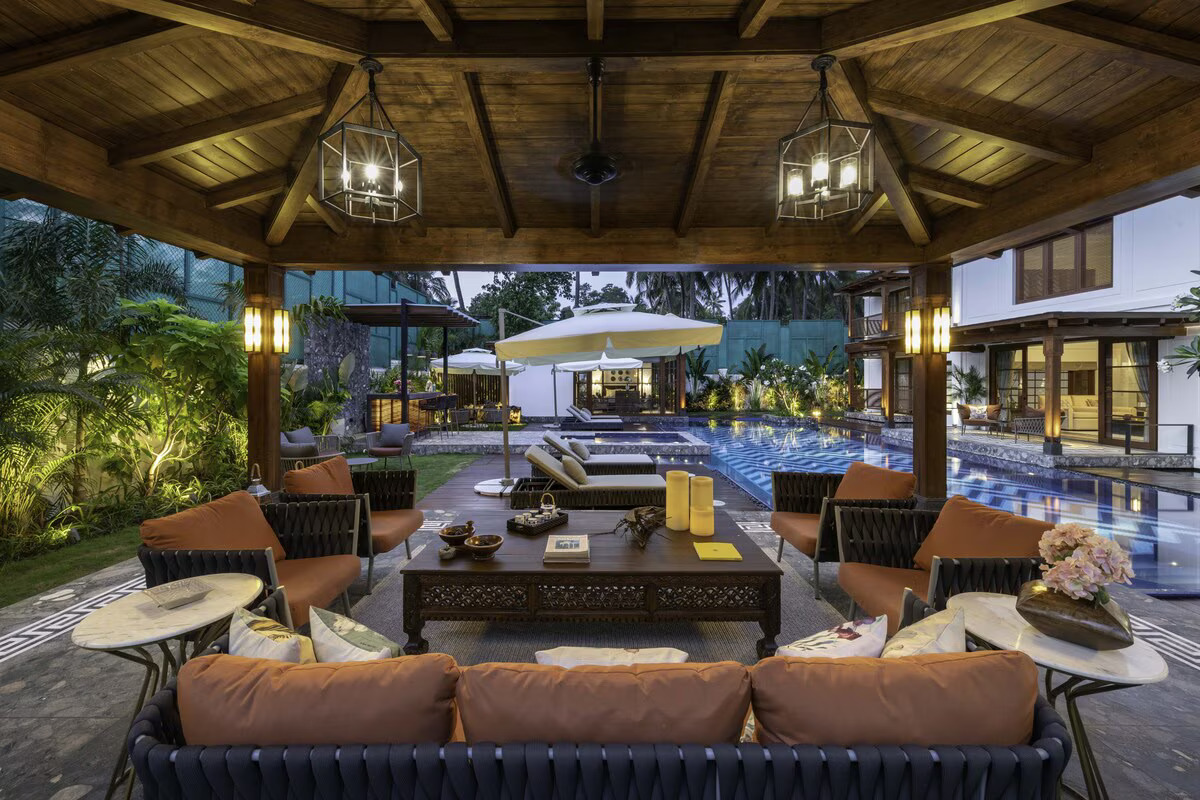
As we conclude our journey through the captivating history and culture of Candolim, we hope you've been drawn in by the tales woven into its fabric. Beyond its stunning beaches and lively atmosphere, Candolim stands as a testament to the resilience and cultural richness of Goa. Next time you stroll its shores, head over to Azara Beach House, 300 metres from Candolim Beach — with spacious 5-BHK rooms, an in-house chef and a beautiful clear pool, it's a top choice for a luxurious and exclusive stay.